Private research preview · Access limited

What you know is worth more than you can say.

The large AI and platform corporations have already harvested the world's knowledge — unasked, uncompensated, to their own advantage. Next, their models learn how decision-makers judge. mindmodels reverses the relationship: in 100 days we elicit your implicit decision knowledge and turn it into a model that belongs to you — queryable, transferable, lasting.

100 daysof methodical deep elicitation, daily, one-on-one
1 modelyours. Personal, proprietary, precise
1:1run exclusively in person — by the inventor himself
25 yearsof think-tank practice behind the method

Three phases. One model.

Four decades of decisions have produced something in you that appears in no org chart, no handbook and no succession plan: judgement. mindmodels makes it visible — and usable. In plain terms: we ask the right questions, long enough, in the right order. And build a model of your thinking from your answers.

Phase 01 — days 1–100

Elicitation

One single, precise question per day — where you already think: on your phone. Each question builds adaptively on your previous answers and drills where your experience is densest: critical decisions, misjudgements, grey areas, gut calls that proved right.

Phase 02 — in parallel

Structuring

Episodes become patterns. Your answers are methodically condensed into heuristics, decision rules, priority orders and edge cases — the actual scaffolding of your judgement, which you yourself would never have written down this way.

Phase 03 — from day 100

Modelling

The structured knowledge is turned into a machine-usable Mind Model: queryable in dialogue, integrable into your organisation, trainable on new situations. Your thinking — available even when you are not in the room.

Fig. 1 · The architecture of the method
01 · Starting pointA dense tangle of glowing copper threads — implicit, unretrieved knowledge

Implicit knowledge

Decades of judgement — bound to your person, documented nowhere, accessible to no one. Yet.

Decades · unretrieved
02 · Days 1–100A single copper thread with glowing nodes — the daily question

Elicitation in series

One precise question per day on your phone — Critical Decision Method, laddering, boundary probes. Episode by episode.

100 days · 1 question / day
03 · in parallelCopper threads woven into a precise fabric — structuring

Structuring

Episodes become patterns: heuristics, decision rules, edge cases — the scaffolding of your judgement.

Patterns, not anecdotes
04 · OutcomeAn arch of copper threads with a glowing dot — the Mind Model

Mind Model

Your thinking as a machine-usable model: queryable in dialogue, integrable into your organisation — and in your possession.

Queryable · transferable · yours

Fig. 1 — Externalisation of implicit knowledge with the mindmodels method. The daily short dialogue (Critical Decision Method, contrast & boundary probes, laddering) retrieves episodic experience; continuous condensation turns it into three modellable layers from which the personal Mind Model emerges. Method: Christopher Peterka, gannaca.

A procedure. Scientifically grounded.

»We can know more than we can tell.«

Michael Polanyi · The Tacit Dimension, 1966

Epistemology

Tacit knowledge — Polanyi

The core of entrepreneurial excellence is implicit: it can be shown, but hardly written down. This is exactly why classic knowledge bases and succession handbooks fail. mindmodels starts at the source — episodic experience itself.

Knowledge management

SECI spiral — Nonaka & Takeuchi

Since »The Knowledge-Creating Company« (1995), the externalisation of implicit knowledge has been regarded as the most valuable and most difficult step of knowledge creation. The 100-day dialogue is externalisation in series — daily, cumulative, individual.

Expertise research

Cognitive task analysis — Ericsson, Klein

The method adapts proven elicitation techniques from expertise research — Critical Decision Method, laddering, contrast and boundary probes (naturalistic decision making) — to a format that fits the life of a busy decision-maker.

AI research

From knowledge bottleneck to Mind Model

Knowledge elicitation was the historic bottleneck of expert systems — and is the bottleneck of personalised AI today: large models can do many things, but not your judgement. Curated, structured experience data of individual top decision-makers is the scarcest asset of the next model generation. Whoever owns it, owns an asset.

Legacy. Future-readiness. Asset protection.

What remains of you?

Legacy

Memoirs tell what you did. A Mind Model preserves how you thought — the decision logic behind a life's work. For your family, your successors, your company: not a monument, but a counterpart.

Your company keeps asking you — even later.

Future-readiness

Succession, advisory board, sale: in every transition, experience evaporates. Research on knowledge attrition counts the loss caused by departing key people among the most expensive unsolved problems of management. The Mind Model keeps your judgement within your organisation's reach.

Intangible wealth, treated as wealth.

Asset protection

Most of modern company value is intangible. Your experience is its least protected part. As a structured, proprietary model it becomes transferable, licensable, inheritable — a new asset class in the family-office portfolio.

What you receive — concretely.

A Mind Model is neither a report nor a coaching protocol. It is an asset with three faces — depending on the perspective you take:

Technically

A working model.

  • A structured knowledge base: your heuristics, decision rules and edge cases — each grounded in the episodes it came from. Versioned, extensible.
  • Queryable in dialogue: usable as a counterpart that answers with your standards — and integrable into your systems and future AI tools.
  • Exportable in open formats: no lock-in. Stored encrypted in the EU.
Practically

A counterpart that stays.

  • For your organisation: successors, boards and executives query your judgement without burdening your calendar — today, and once you no longer take every call.
  • For your decisions: a sparring partner that turns your own standards against you — the sharpest form of self-examination.
  • For your future: the foundation on which virtual employees work with your judgement instead of the internet's average.
Legally

Property, not a subscription.

  • The contents belong to you — contractually fixed, with defined usage rights: transferable, licensable, inheritable like other intangible assets.
  • Mandate-level confidentiality, unlimited in time. Your data trains no third-party models — contractually excluded.
  • The method remains the intellectual property of Christopher Peterka; your model remains yours. Details are set in the mandate agreement.
Five minutes in the morning: the daily question, answered as a voice note.mindmodels imagery · illustrative
Decades in notebooks and margin notes — readable by one person only.mindmodels imagery · illustrative
Succession works when the judgement travels — not just the signature folder.mindmodels imagery · illustrative

Knowledge dies twice.
Both deaths have become avoidable.

The first death is biological: with every person, judgement disappears that no one wrote down — because it cannot be written down (Polanyi). The second death is institutional: organisations lose knowledge they believed they possessed. NASA never lost the Saturn V documentation — and still could not build the rocket again, because the people who could read between the lines were gone.

Both are hitting ageing economies simultaneously: in Germany alone, the baby-boomer cohorts — close to 30 percent of today's workforce — reach retirement age by the mid-2030s (Federal Statistical Office). Research on knowledge attrition has described for two decades what happens next: decision quality drops, errors repeat, handovers fail (DeLong, Lost Knowledge, Oxford 2004). Large enterprises put the productivity losses from inefficient knowledge transfer at tens of millions of dollars per year (Panopto/YouGov 2018).

And it is a matter of self-respect. Developmental psychology calls the core task of mature life generativity: the need for one's work to carry beyond one's presence (Erikson). Letting a lifetime of decisions simply evaporate — now that it has become preservable for the first time — is not modesty. It is an omitted legacy: towards yourself, your family, and your life's work.

Sources: Polanyi (1966), The Tacit Dimension · DeLong (2004), Lost Knowledge: Confronting the Threat of an Aging Workforce, Oxford Univ. Press · Panopto Workplace Knowledge & Productivity Report (2018, with YouGov) · Federal Statistical Office of Germany, labour force projection · Erikson (1950), Childhood and Society.

An ark for judgement.

mindmodels does not come from nowhere. It is the consistent application of what the gannaca think tank has been documenting since 1996: see technological and societal ruptures early, translate them into decisions, keep responsibility human — the human decides, the machine assists (Peterka, Symphonie der Systeme, 2025).

The macro fact behind it: the large language models have largely read the open web empty — researchers expect the stock of high-quality public text data to be exhausted within this decade (Villalobos et al., Epoch AI). What counts afterwards is what never stood on the web: curated, evidenced, episodic decision knowledge of individual top minds. Whoever owns it, owns the scarcest raw material of the next model generation. Whoever gives it away has already given it to the platforms.

A vault gate in arctic rock — preserving judgement

On Svalbard, humanity stores seeds — not because tomorrow's harvest will fail, but because no one knows which variety will be vital the day after. The Ark did not take everything; it took what could germinate. mindmodels is that vault for judgement: not all knowledge, but the part that can sprout again — yours.

Svalbard Global Seed Vault, since 2008 · Genesis 6–9 · mindmodels, since 2026

Why this feels exotic to you.

If this offer feels foreign, it is rarely the offer — and almost always six circumstances, especially pronounced in Europe:

  1. Media discourse runs years behind.

    What newsrooms debate as the future today left the labs yesterday. Personalised knowledge models are technically the present — in public conversation they are still science fiction. That gap is not an argument against the matter; it is your window.

  2. Ageing societies defend the status quo.

    A demography whose median voter approaches retirement rewards preserving the familiar — not preserving the valuable. The reflex "we don't need this" is incumbency protection, not judgement.

  3. Full-coverage mentality and over-regulation train hesitation.

    Where every novelty is first read as a liability question, the imagination for opportunity atrophies. mindmodels answers the regulatory question soberly — EU data residency, clear contracts — and does not wait for others to stop hesitating.

  4. Digital competence is unevenly distributed.

    A significant share of the European decision-maker generation has never had AI in their own hands — Germany ranks below the EU average in basic digital skills (European Commission, DESI). What one cannot operate, one takes for magic or fraud. Both are more comfortable than learning.

  5. Saturation feels like safety.

    Three good decades have left a worldview in which one's own lead is assumed to be a state of nature. From that position, every precaution looks excessive — until, in hindsight, it wasn't.

  6. The offer is genuinely new.

    Honestly: there has been no procedure that systematically retrieves implicit decision knowledge and turns it into one's own machine-usable model. New things feel exotic. The Svalbard vault felt exotic in 2008 — today nobody asks what it is for.

The method is not exotic. The head start is. → Request a mandate
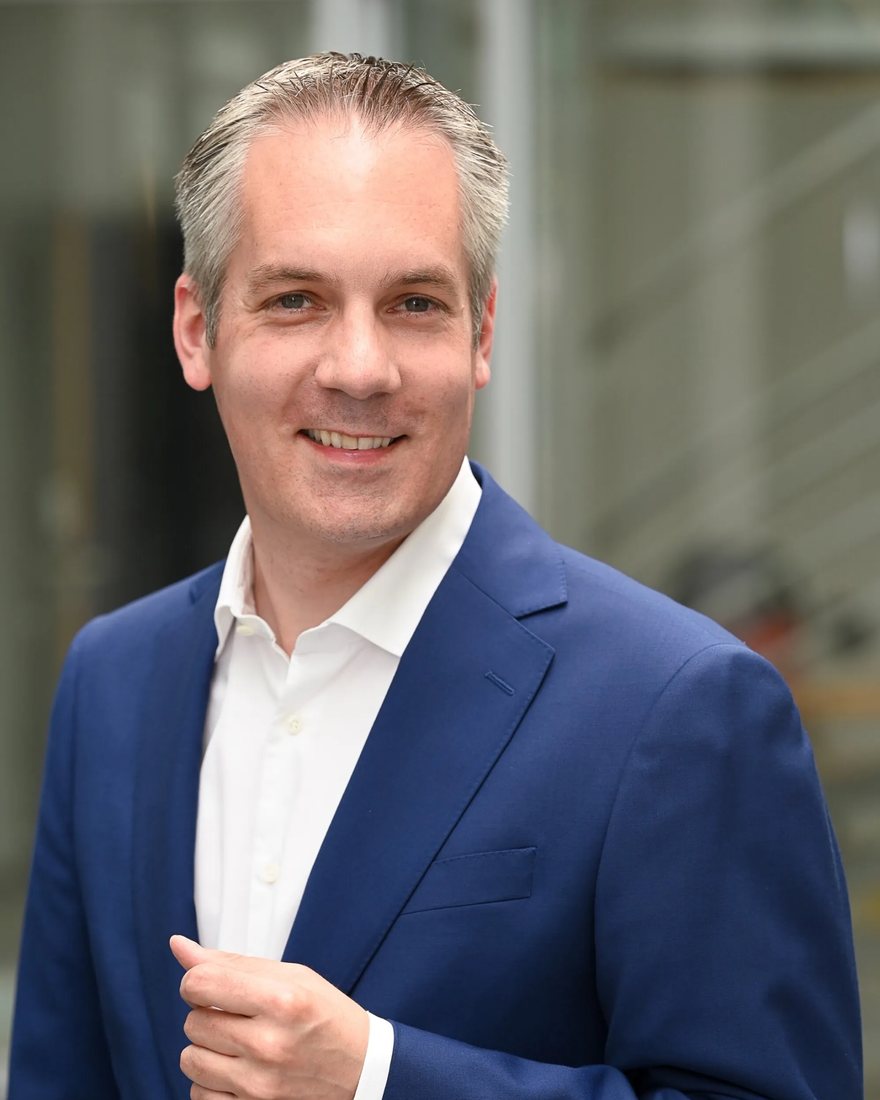
Christopher Peterka — inventor of the mindmodels method
Christopher Peterka LinkedIn ↗

The method carries a name: Christopher Peterka.

mindmodels was invented and developed by Christopher Peterka — founder and managing director of the gannaca think tank (Cologne), with 25 years of documented foresight and advisory work for decision-makers in mid-sized companies, foundations, governments and NGOs. The method combines this practice with the epistemology of tacit knowledge and the state of AI research.

mindmodels is proprietary intellectual property. Every application of the method is carried out exclusively by gannaca — personally accountable: its inventor.

»The most valuable resource of the coming decade is not compute. It is crystallised judgement — and it is leaving us weekly, with every retirement, irretrievably. I was not willing to accept that.«

Christopher Peterka · inventor of mindmodels

Access is not bought.
It is substantiated.

mindmodels is in a non-public trial phase with a strictly limited number of mandates. We take few. We review every application personally — your position, your decision biography, your reasoning. If it fits, we will be in touch. If not, you will hear that too.

Discretion is mutual: your application is treated confidentially, stored encrypted, and never passed on. All further communication will be in English.

At least 50 characters. Substance beats length.

Received.

Your application now lies where it belongs: on the inventor's desk. We review personally and will get back to you — either way, in English. Please refrain from follow-ups; thoroughness takes a few days.

Good that you wrote.

Answered briefly.

What exactly is a Mind Model? +

A structured, machine-usable representation of your decision knowledge: heuristics, priority orders, edge cases, experience episodes — elicited in the 100-day dialogue, condensed with methods from expertise research, usable as a queryable counterpart for family, succession and organisation.

How much of my time does it take? +

A few minutes a day, for 100 days. One question, one answer — text or voice note, whenever it suits you. The actual work — structuring and modelling — happens on our side.

What happens to my answers? +

They are stored encrypted, used exclusively for your Mind Model, and never passed to third parties. Mandate-level confidentiality is part of the agreement — unlimited beyond the end of the engagement.

What does mindmodels cost? +

Concretely: mandates start at EUR 45,000 net; the typical range is EUR 45,000–120,000 net depending on modelling depth, integration scope and usage rights, with optional ongoing model maintenance from EUR 4,000 per month. Final terms are set in the mandate agreement. For perspective: replacing a single key position costs organisations up to 200% of an annual salary by common HR estimates (SHRM) — and does not replace the judgement. Large enterprises put productivity losses from poor knowledge transfer at around USD 47 million per year on average (Panopto/YouGov 2018).

Does my knowledge train third-party AI models? +

No — that is precisely what mindmodels protects against. Your answers are stored encrypted in the EU, used exclusively for your own Mind Model, and passed neither to model providers nor to any other third party. While the platforms harvest knowledge unasked, this is the counter-model: your knowledge, your model, your control.

Can I transfer, license or bequeath my Mind Model? +

Yes — that is the core of asset protection. The contents of your Mind Model are your property and can be structured like other intangible assets: contributed to entities, transferred to successors, licensed. The underlying method remains the intellectual property of Christopher Peterka; details are set in your mandate agreement.

Who is behind mindmodels? +

mindmodels is an invention of Christopher Peterka, delivered by gannaca GmbH & Co. KG (Cologne) — the think tank that has advised decision-makers in mid-sized companies, foundations, governments and NGOs for 25 years: more than 1,500 decision-makers in 55 countries. Publicly verifiable: two TEDx talks (38,000+ plays on TED.com), two books (Murmann Publishers 2019; »Symphonie der Systeme«, 2025), stages such as the Handelsblatt Energy Summit 2026 — and a public foresight tracker with dated, falsifiable predictions since 1996.